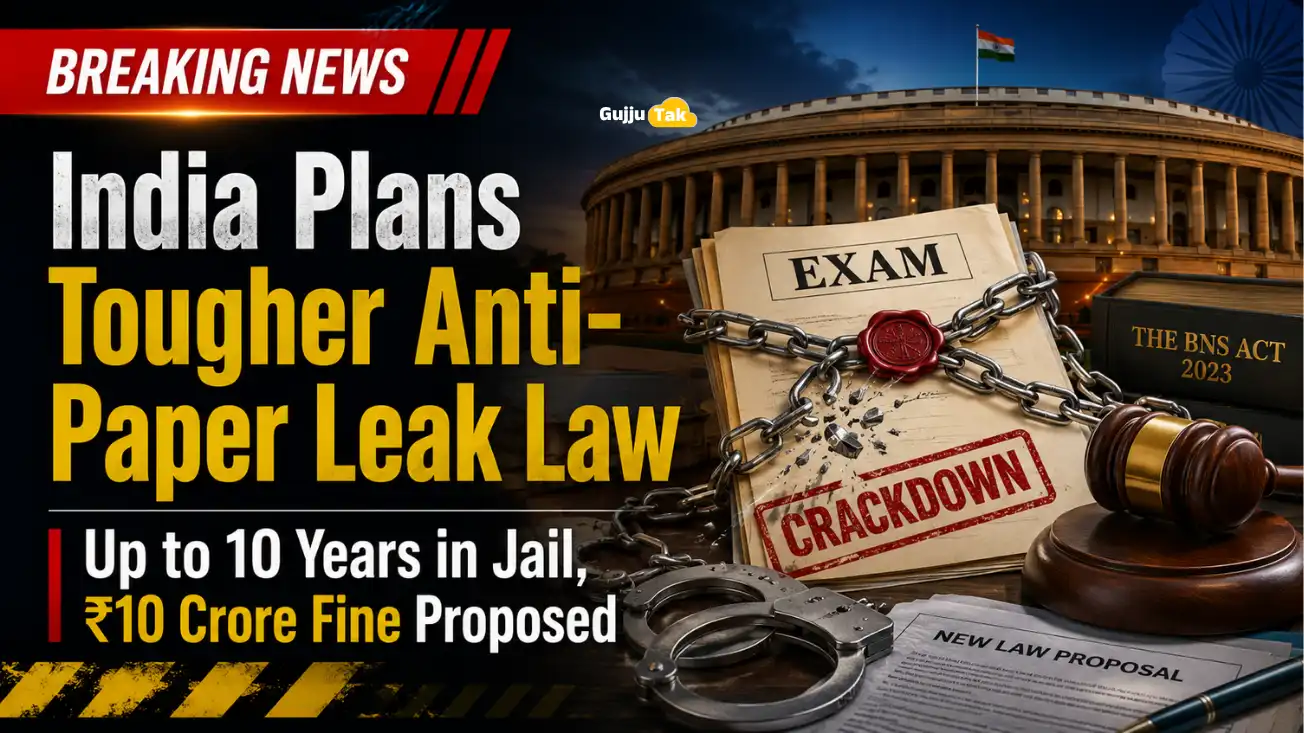


In a major move to strengthen the integrity of public examinations, the Central Government is preparing a stricter legal framework to curb paper leaks across the country. The proposed amendment aims to introduce tougher punishments, higher financial penalties, fast-track trials, and strict action against organized exam fraud networks.
The government believes the new law will protect the future of millions of students and ensure greater transparency in recruitment and entrance examinations such as NEET, UPSC, SSC, RRB, IBPS, and NTA exams. If approved, it will become one of India’s toughest legal measures against paper leak crimes.
- What is the proposed anti-paper leak law in India?
- Up to 10 Years in Prison for Paper Leak Offenders
- Fine of Up to ₹50 Lakh
- Organized Gangs May Face Even Tougher Action
- Fast Investigation and Time-Bound Trial
- Tough Penalties for Exam Agencies and Service Providers
- Management Officials Will Also Be Held Accountable
- Law to Cover Major National Examinations
- NEET May Shift Towards Computer-Based Testing
- Pending Cases May Be Shifted to Special Task Force
- Government's Objective
- FAQ
What is the proposed anti-paper leak law in India?
The proposed amendment seeks to punish paper leak offenders with 5 to 10 years of imprisonment, fines of up to ₹50 lakh, fast-track investigations, special courts, and stricter action against organized gangs, examination agencies, and institutions involved in exam malpractice.
Up to 10 Years in Prison for Paper Leak Offenders
According to the proposed amendment, individuals found guilty of leaking examination papers or engaging in examination malpractice will face a minimum prison sentence of five years. In serious cases involving large-scale fraud or repeated offences, the punishment may extend up to 10 years of imprisonment.
The proposal is intended to create a strong legal deterrent against those attempting to manipulate competitive examinations.
Fine of Up to ₹50 Lakh
Apart from imprisonment, convicted individuals may also face financial penalties of up to ₹50 lakh. The government believes that imposing substantial monetary fines will discourage organized paper leak operations and reduce examination-related fraud.
Organized Gangs May Face Even Tougher Action
The proposed law includes stricter provisions for organized criminal networks involved in paper leaks. If investigators establish that a paper leak was carried out by a gang or organized group, the accused could face a minimum sentence of seven years in prison.
Such organizations may also be fined up to ₹10 crore, making it one of the toughest financial penalties proposed for examination fraud in India.
Fast Investigation and Time-Bound Trial
To prevent cases from remaining pending for years, the government plans to introduce a time-bound investigation process. Every paper leak case will be investigated within two months under the proposed framework.
The proposal also includes the establishment of special fast-track courts in every state in consultation with the respective High Courts. These courts are expected to conduct day-to-day hearings and aim to dispose of cases within three months after the filing of the charge sheet.
Tough Penalties for Exam Agencies and Service Providers
The proposed amendment is not limited to individual offenders. Examination agencies, service providers, or institutions found involved in malpractice could face fines of up to ₹5 crore.
In addition, such organizations may be blacklisted for up to eight years, preventing them from conducting future examinations.
Management Officials Will Also Be Held Accountable
The proposed law provides for direct action against officials responsible for examination management. If management personnel are found guilty of facilitating or participating in paper leak activities, they may face 5 to 10 years of imprisonment along with heavy financial penalties.
Law to Cover Major National Examinations
The stricter provisions are expected to apply to several major recruitment and entrance examinations conducted by the Central Government, including:
- NEET
- UPSC
- SSC
- RRB
- IBPS
- NTA examinations
The primary objective is to improve the credibility, security, and transparency of India’s examination system.
NEET May Shift Towards Computer-Based Testing
Alongside legal reforms, the government is also considering structural changes to NEET-UG. Officials are evaluating the possibility of introducing Computer-Based Testing (CBT) and conducting the examination in multiple phases to improve security and reduce the risk of paper leaks.
Student feedback is also expected to play a role in shaping future examination reforms.
Pending Cases May Be Shifted to Special Task Force
Paper leak cases currently under investigation could be transferred to a Special Task Force (STF) for faster action. Existing court cases may also be moved to fast-track courts to ensure quicker disposal and timely justice.
Government’s Objective
The government says the proposed amendment is designed to restore public confidence in India’s examination system. Through stricter punishments, faster investigations, and time-bound trials, authorities aim to eliminate organized exam fraud and safeguard the future of millions of students.
FAQ
Will the new paper leak law apply to NEET and UPSC?
Yes. The proposed amendment is expected to cover major Central Government examinations, including NEET, UPSC, SSC, RRB, IBPS, and NTA examinations.
What punishment is proposed for paper leak offenders?
The proposal includes 5 to 10 years of imprisonment and fines of up to ₹50 lakh, depending on the severity of the offence.
What action will be taken against examination agencies involved in malpractice?
Agencies found guilty may face fines of up to ₹5 crore, blacklisting for up to eight years, and criminal action against responsible management officials.
