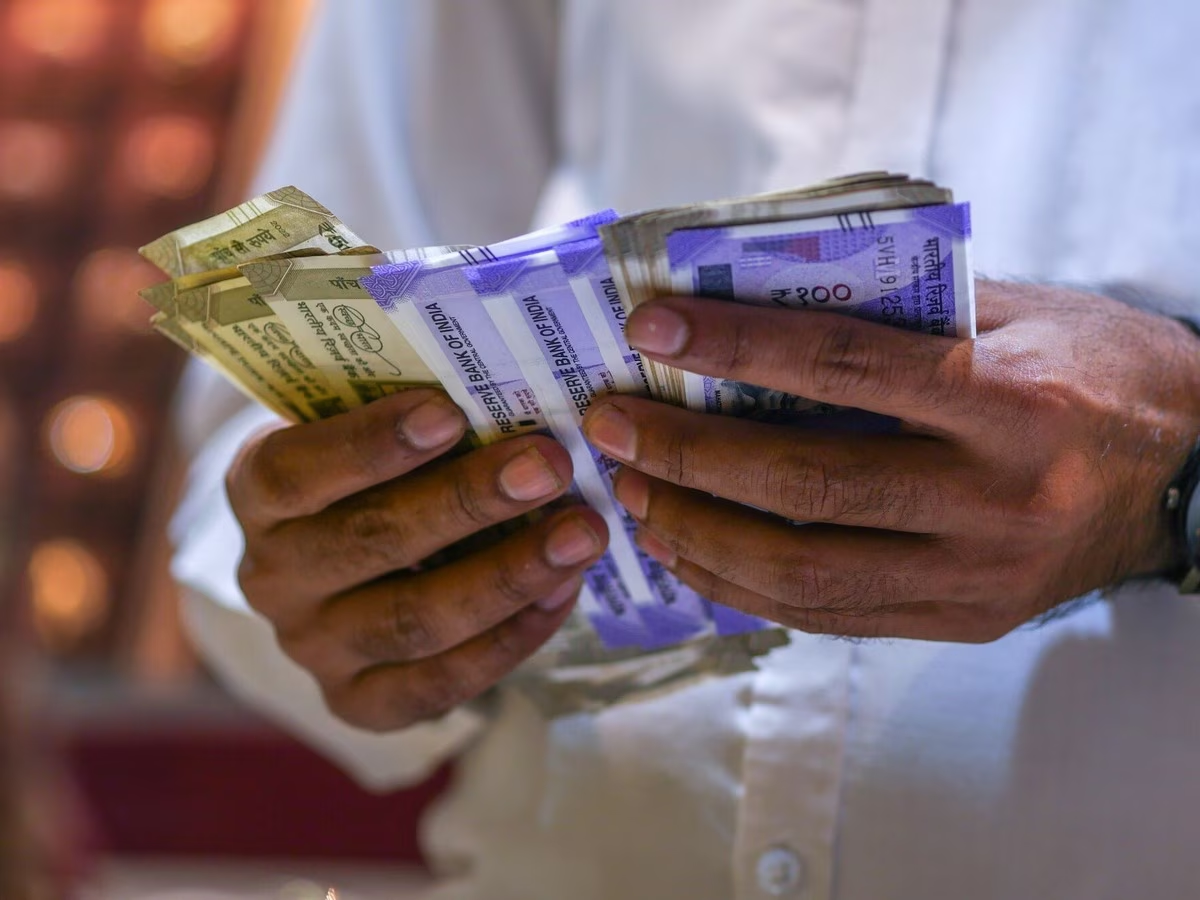


RBI is considering polymer currency notes in India. While plastic notes cost up to three times more to print than paper notes, they last much longer and offer better security.
India could soon witness a major transformation in its currency system as the Reserve Bank of India (RBI) explores the possibility of introducing polymer-based plastic banknotes. The move is aimed at improving currency durability, reducing replacement costs, and strengthening security against counterfeiting.
Recent discussions at high-level RBI board meetings have reportedly focused on the long-term benefits of polymer notes, especially as demand for cash circulation continues to rise and traditional cotton-based paper notes wear out quickly.
Polymer Notes Cost More to Print
Unlike conventional banknotes made from cotton-based paper, polymer notes are produced using a specialized polypropylene plastic substrate. These notes incorporate advanced security features such as transparent windows, embedded holographic elements, and multiple anti-counterfeiting layers.
Due to the use of sophisticated materials and security technology, the production cost of polymer notes is estimated to be two to three times higher than that of traditional paper currency.
A standard paper note currently costs approximately ₹1 to ₹3 to print, depending on its denomination and security features. In comparison, a polymer note of the same denomination could cost between ₹2 and ₹6 per note during the initial production phase.
What Does It Cost to Print Paper Notes?
India’s existing banknotes are primarily manufactured using cotton-based paper. Printing costs vary according to denomination, design complexity, and security requirements.
A ₹100 note generally costs between ₹1.51 and ₹1.77 to print, while a ₹500 note costs roughly ₹2.29 to ₹3.00 per note. Higher denominations often require additional security measures, increasing production expenses.
Why Polymer Notes May Be Cheaper Over Time
Although polymer notes are more expensive to manufacture initially, experts believe they can significantly reduce overall currency management costs in the long run.
Polymer banknotes typically last three to four times longer than paper notes. Their durability reduces the frequency of note replacement, lowering printing, transportation, and distribution expenses for central banks.
As a result, the higher upfront cost can be offset by substantial savings over the life cycle of the currency.
Key Advantages of Plastic Currency
Polymer notes are far more resistant to wear and tear than traditional paper notes. They do not tear easily and can withstand exposure to water, humidity, sweat, and everyday handling.
Their durability helps maintain note quality in circulation for longer periods, reducing the need for frequent replacement of damaged or soiled currency. This can lead to significant savings for the RBI and improve the efficiency of currency management.
India’s Current Position on Polymer Notes
The RBI has been evaluating polymer banknotes for several years. Pilot projects involving lower-denomination notes such as ₹10 and ₹20 have been discussed and tested in select locations in the past.
However, cotton-based paper notes remain the primary form of currency in circulation across India. While polymer notes continue to be considered as a future alternative, a nationwide rollout has not yet been announced.
Printing Cost of Popular Indian Banknotes
| Denomination | Estimated Printing Cost |
|---|---|
| ₹10 Note | Around ₹1.01 |
| ₹20 Note | Around ₹1.00 |
| ₹50 Note | Around ₹1.22 |
| ₹100 Note | ₹1.20 – ₹1.51 |
| ₹200 Note | Around ₹2.93 |
| ₹500 Note | Around ₹2.29 |
Conclusion
Polymer notes may cost significantly more to print than traditional paper currency, but their superior durability and advanced security features make them an attractive long-term option. If introduced nationwide, polymer banknotes could help the RBI reduce replacement costs, improve currency quality, and strengthen protection against counterfeiting.
